
The River Seine
|
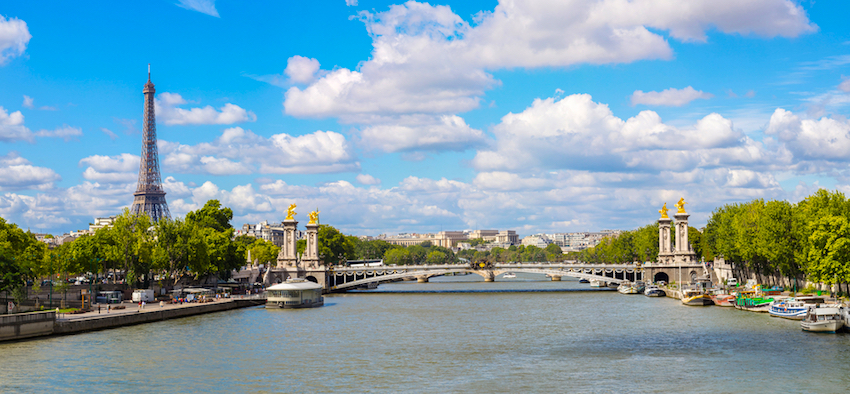
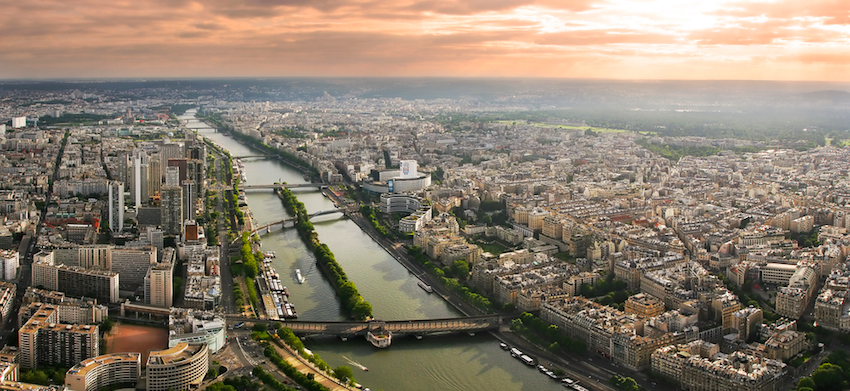
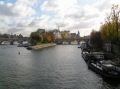
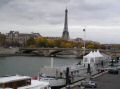
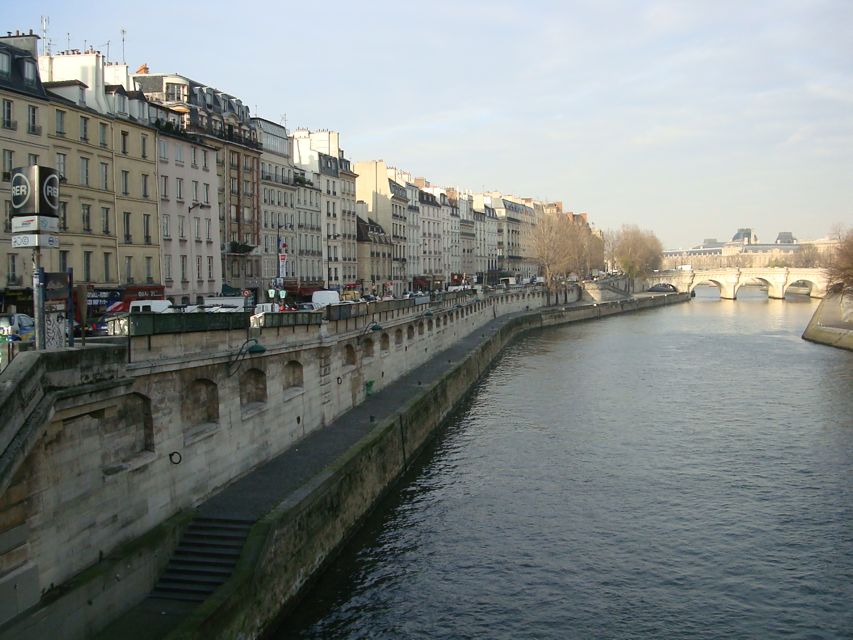
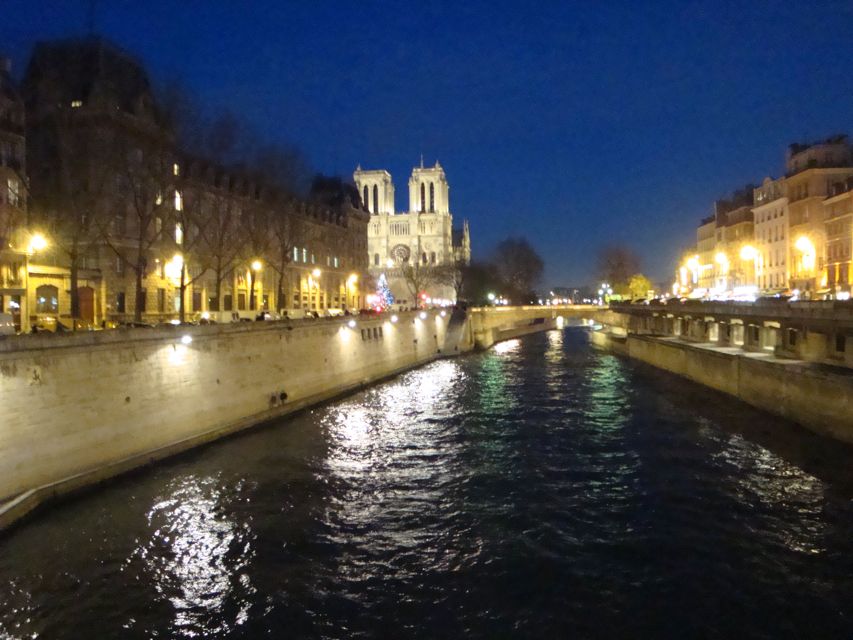
While it's common knowledge that the Notre Dame Cathedral is the technical epicenter of Paris, the real essence of the city is captured by the river Seine. Almost any city situated near water is changed by that relationship between the static and the constantly moving. On a metaphysical level, the water is a type of mirror in which the city finds its own reflection. For centuries, poets, painters, philosophers, novelists, architects, lovers, suicides, and finally, tourists, have understood this powerful attraction. The river Seine flows right through the heart of Paris bordering 10 of the 20 arrondisements. It was no accident that the city evolved around this gigantic avenue for commerce and transportation, or that the early Parisi tribes on the river's island were attacked and overthrown by the Romans. This early coup took place on what was later to become some very prime real estate. At that time the river was called by it's Latin name: Sequana. The river is still the chief commercial waterway and half of the water used in Paris still comes form the Seine. Don't think about that when you look at the sick green water flowing under the bridge, or when your waiter brings you a glass of tap water. |
|
Tourists are often confused about the terms "right bank" and "left bank" and spend hours on
street corners with crumpled maps trying to orient themselves and figure out which side of the riverbank they are
standing on. The system is very simple and was devised because the river's curvy nature often does make orientation
difficult. The trick is to remember when you face DOWNRIVER the left bank is on your left and the right bank is
on your right. If you can't tell left from right at this point you should not be traveling alone. If you can't
figure out which way the water is flowing (don't look at the boats, they go upstream too!) drop a potato chip or
look for some debris and see which way it's floating. Then you will be able to make it to the Café Les
Deux Magots on time, and not end up at La Defense. |
|
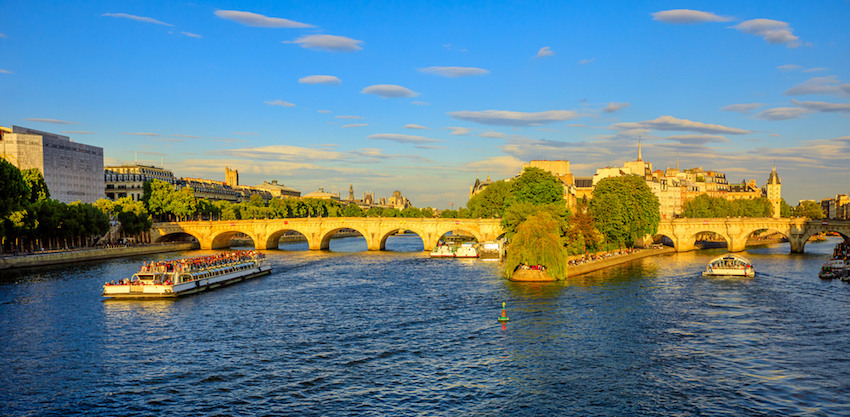
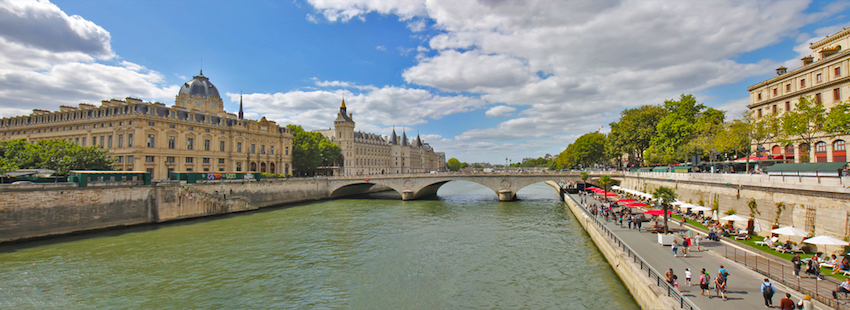
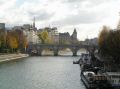
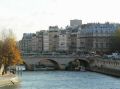
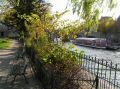
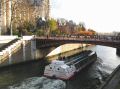
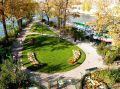
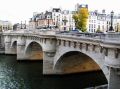
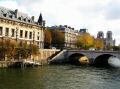
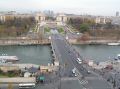
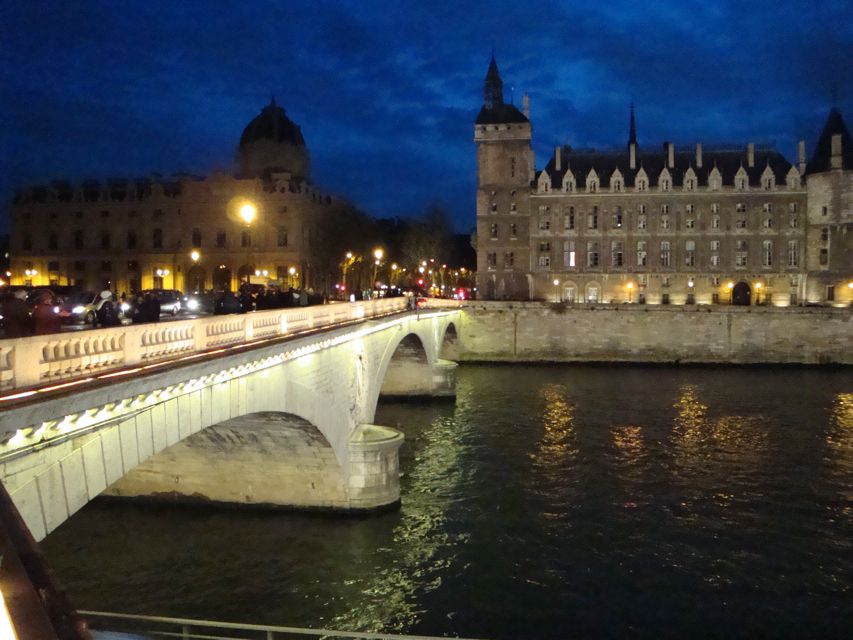
There are 32 bridges on the river in Paris, some of them more impressive than others. The Oldest bridge is the Pont Neuf which has been immortalized by artists and poets and even 20th century films. (see The Lovers of the Pont Neuf) There is a beautiful little island crossed by the bridge which the riverboat tours now use as a docking station. In the spring or summer it's a wonderful place to hang out on a bench under the willow trees, or sunbathe on the slanted stone embankments near the tended gardens in its center. To get there, simply make your way toward the equestrian statue of Henri V and find the steps leading down toward the docks. If you are the kind of person who likes watching boats this is a great spot. Actually it is one of the nicest places to hang out in all of Paris. |
|
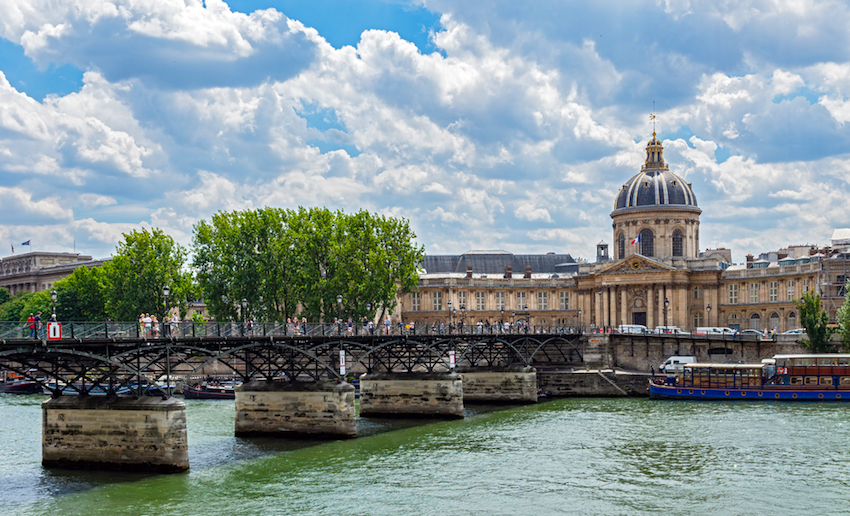
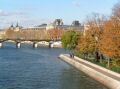
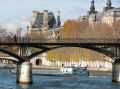
Another popular bridge is the Pont Des Arts, which differs from many other bridges in that it is constructed of metal and is entirely pedestrian. With one of the most stunning views in all of Paris this is a top hang-out and pick-me-up zone in good weather. People bring wine and picnics, others bring guitars and the atmosphere is almost always festive. |
|
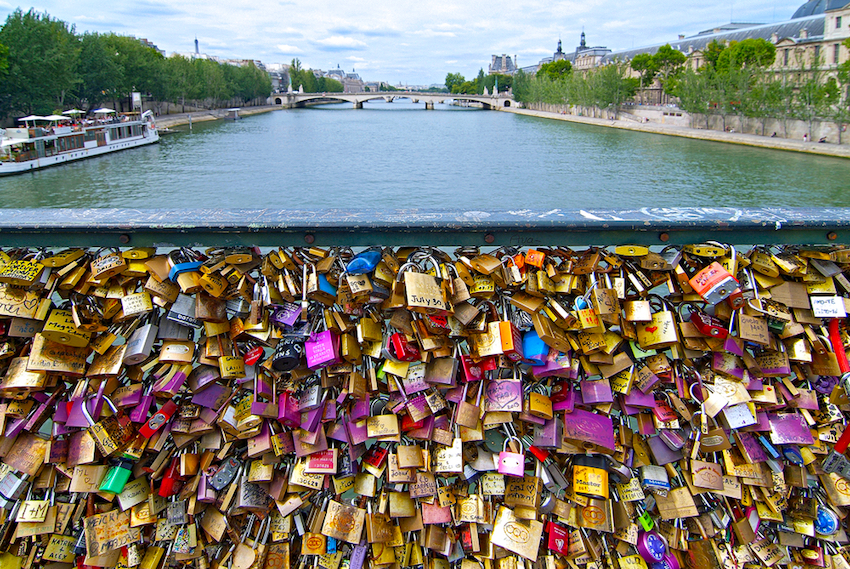
Starting in 2008 romantic couples, mostly if not all tourists, began attaching padlocks with their names to the bridge and throwing the key into the Seine as a gesture of their commitment to each other. At its peak there were more than a million locks and city officials began to be concerned that the weight might be damaging the structure of the bridge. In 2014 part of the parapet actually collapsed and the authorities began a social media campaign called Love without Locks, encouraging tourists to take selfies instead. They removed the locks which weighed around 45 tons and began to replace the railings with panels that you could not hang a lock on. |
|
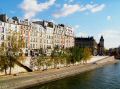
Below the bridge on the left and right quays you will see hundreds of sunbathers, cyclists, strollers, joggers anything else you could hope for, making use of the elegant stone quays. The quays run along the entire length of the river as if bisects the city, parts merge into riverside highways and others into pedestrian walkways and bicycle paths. A section of the pedestrian bank has been designated the "Paris Beach" by the new Mayor, and has become THE summer attraction in the city. Thousands of tons of sand are imported along with full size palm trees, beach chairs and chaise-lounges to create what may be the only artificial "beach" in Europe. It's bizarre, but the French love it. Whether you like it or not, it's a good chance to see some scantily clad Parisians. (my suspicion is that this has something to do with its popularity) |
|
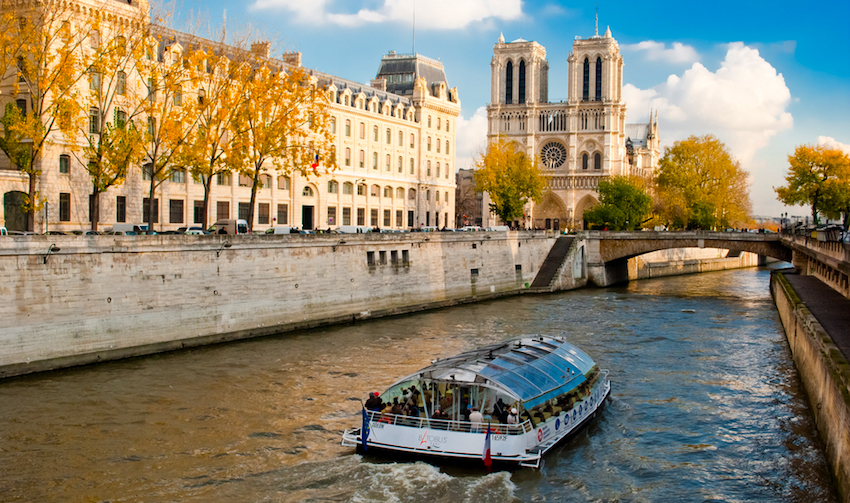
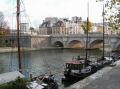
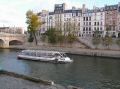
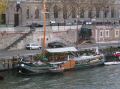
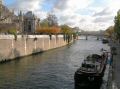
The riverbanks are worth exploring. There are floating restaurants, discos, cafes for those who can afford it, and free benches for all those travelers who are just as happy to enjoy the same view with their own wine, bread and cheese from a local grocer. Houseboats can be examined close up on the right bank near the Orangerie, and the stone walls of the quays are a type of code language for the river's past. If you look carefully you can see the various water levels form past floods, the giant iron rings used to tie river barges to the docks, the odd iron grate or doorway leading to an underground passage, an ancient sewer system, metro portals, an unknown catacomb? These stone embankments are now protected by UNESCO as world heritage sites. The best way to get the feel of the river is of course by boat. There are many boat tour operators in Paris offering various levels of service form taxi-boats to private dining experiences. The most famous are still the Bateaux-Mouches . For more information: Compagnie des Bateaux-Mouches Pont de l'Alma, rive droite, Réservation : 01 42 25 96 10. There are also lunch and dinner cruises which begin by the Musee Dorsay run by Marina De Paris. There is another sightseeing cruise that sails the Canal St Martin. From the Paris Arsenal Marina to the Parc de la Villette or the other way around the trip takes around two and a half hours. |
|
Beyond the mere technical facts surrounding the river and its environs is a deeper and more inexplicable attraction.
The water speaks to us of a past we will never experience but nevertheless find ourselves linked to by association.
Staring at the murky river from a cold bridge in a Parisian winter it is impossible not to think of Paul Celan,
the tormented poet of the holocaust, who plunged to his death in those same waters, or the less known victims of
French revolution when hundreds of bodies were dredged from the depths, or simply the unnamed and uncelebrated
who also met their ends at the river bottom. This is not to say the river represents a cult of death, but it's
interesting to conceive of it as part of the full cycle of life. Great triumphs and great tragedies have occurred
near the river which less aware tourists view as the background to their photo collection. |
|
Note: The BATOBUS sails up and down the seine from the Eiffel Tower to the Institute Du Monda Arabe with stops along the main attractions. It works just like bus service which you can hop on and off. You can buy a day pass or a two day pass and use it to travel up and down the river at your pleasure. The boats are nice too--- wooden decks and glass walls and roof. Stephanos Papadopoulos |
|
Hotels and Apartments |
|
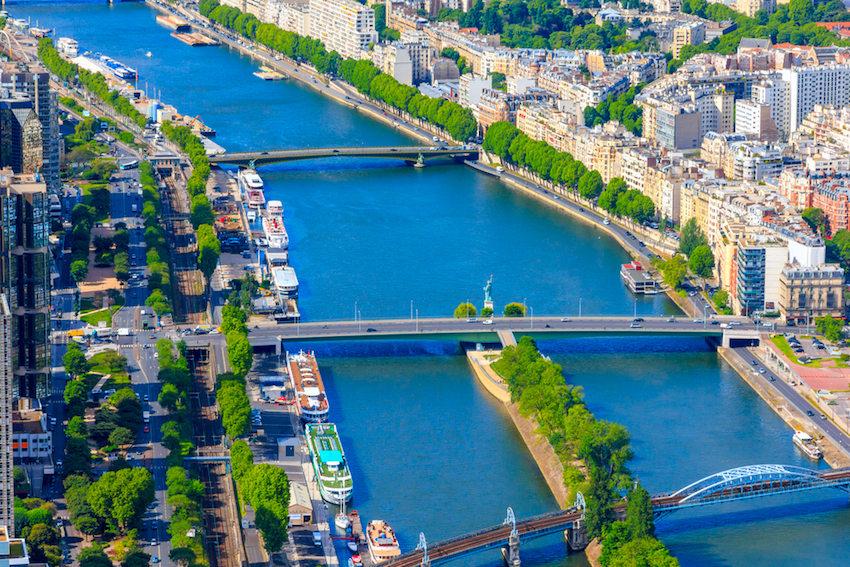
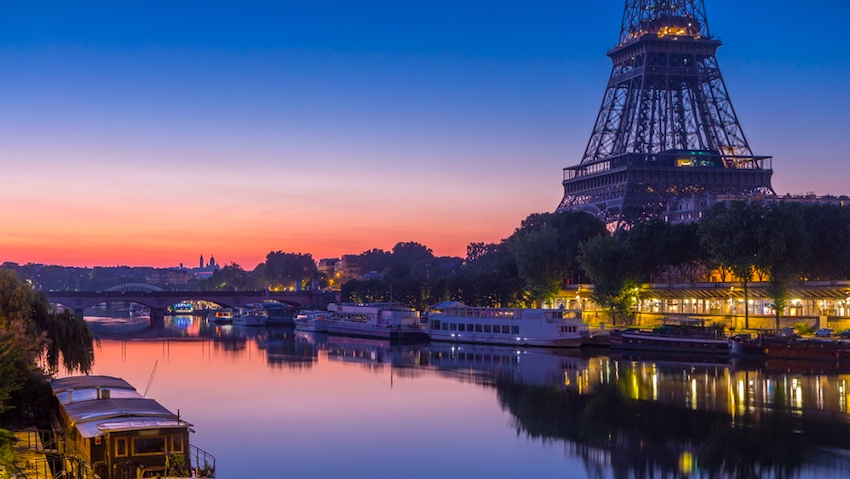
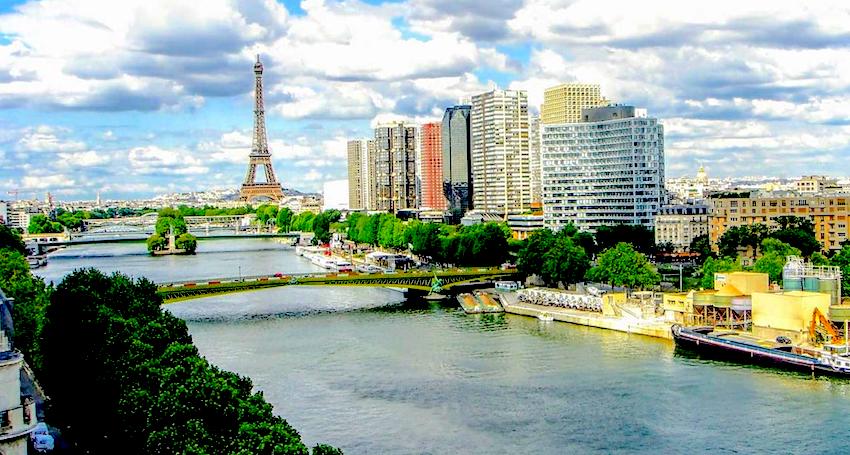
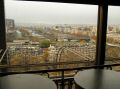
For all those who love rivers, hotels close to or on the Seine include the 3-star Hotel De Orsay, Hotel Verneuil, the Hotel Albe. The 3 star Hotel Le Notre Dame Saint Michael, Citadines Apart'hotel Saint Germain Des Prés, and the 4-star Les Rives de Notre-Dame are right on the river across from the cathedral. All located in the Latin Quarter. Moored at the foot of the Austerlitz station, Hotel OFF is the first floating hotel and bar in Paris. The converted catamaran offers a lounge bar with a panoramic view over the Seine, a plunge pool and a marina. Located between the Left and Right banks, this floating hotel offers unique views throughout the day. The Art Nouveau styled Hotel Eiffel Seine is located beside the River Seine, just a 10-minute walk from the Eiffel Tower. Featuring river views, LUXE EIFFEL TOWER AND SEINE RIVER (above photo) is a superb luxury apartment located in the very chic 16th area of Paris. It consists of three bedrooms, two toilets, a large bathroom, a living room, a dining room and an American kitchen. Use the maps at Paris Hotel Search to find more hotels and apartments. You can click on these photos below to see them full size |
|
|
|
|
|
|
|
|
|
|
|
|
|
|
|
|
|
|
|
|
|
|
|
|
|
|
|
|
|
|
|
|
|
|
|
|


Help Support Matt's Paris Guide
Do you enjoy using my site? Have you found it entertaining as well as useful? If so please show your appreciation by booking hotels through the links found on my Hotels Page. The small commission I make on the bookings enable me to keep working and in most cases you won't find them any cheaper by searching elsewhere. You can
also book at Booking.com's Paris Page and they give me a small percentage on each booking. If you are appreciative of all the free information you
get on my websites you can send a donation through Paypal.